How Claude Code transformed my development workflow and helped refactor a full-stack application from ECS EC2 to Fargate in minutes
Introduction
As a developer constantly exploring new tools and methodologies, I recently embarked on a journey to build a full-stack e-commerce application with real-time event streaming capabilities. What started as a traditional development project became an eye-opening experience with Anthropic’s Claude Code — an AI-powered development assistant that fundamentally changed how I approach infrastructure deployment and application development.
This article chronicles my experience building a React + Express + Kafka application, deploying it on AWS ECS Fargate, and the challenges and triumphs encountered along the way.
The Application: A Modern Event-Driven E-Commerce Platform
Architecture Overview
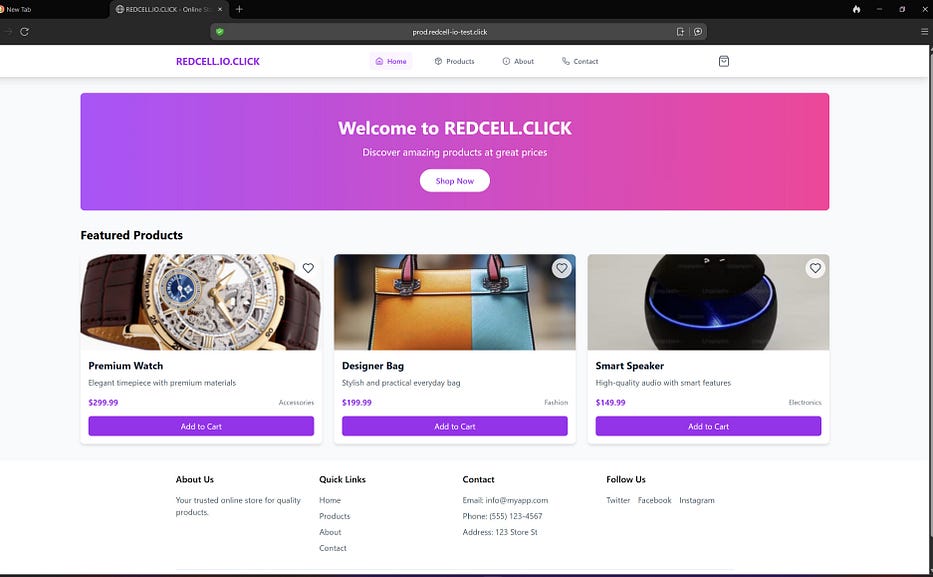
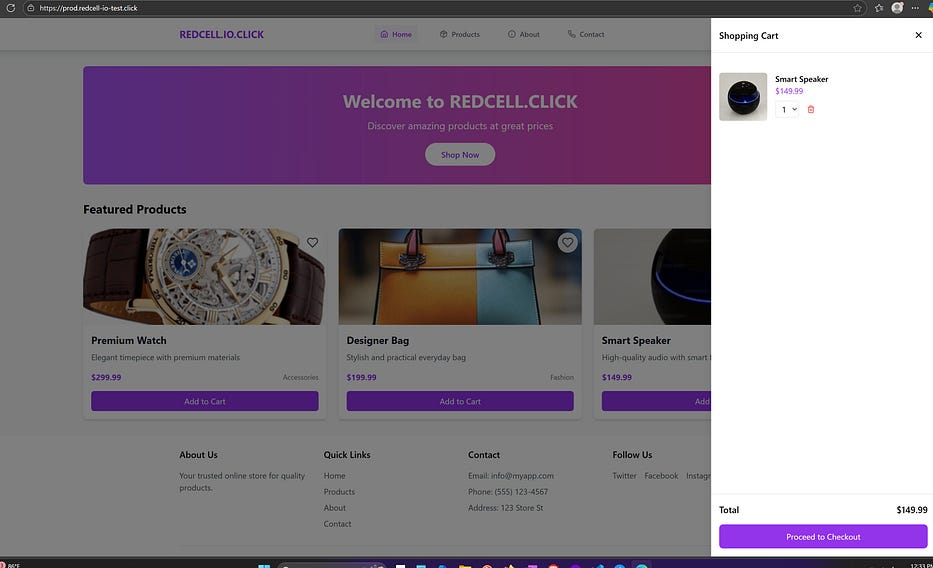
The application I built is a sophisticated e-commerce platform that captures and processes user interactions in real-time. You can view the architecture of the e-commerce platform here : https://claude.ai/public/artifacts/d6890e50-1dc6-4d41-aefb-6bae8b29dbdb
Here’s what makes it interesting:
Frontend Stack:
- React 18 with TypeScript
- Vite for blazing-fast builds
- Redux Toolkit for state management
- Tailwind CSS for styling
- Custom analytics service for event tracking
Backend Services:
- Express.js API server with TypeScript
- KafkaJS for event streaming
- Separate consumer services for event processing
- Comprehensive health monitoring
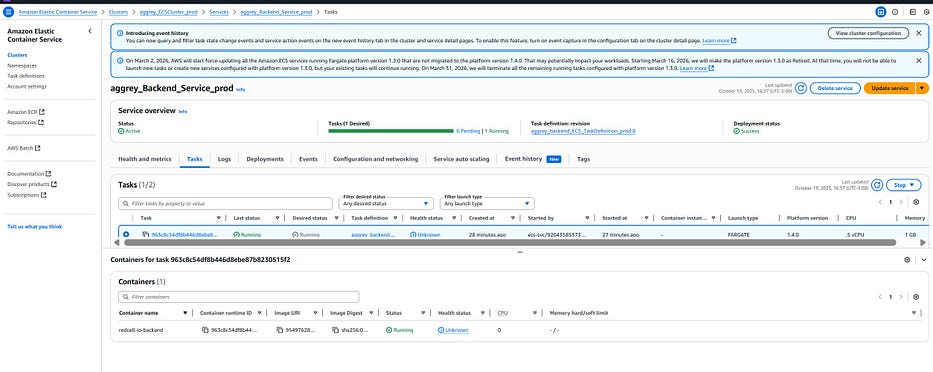
Event Streaming Pipeline:
Browser Interactions → Frontend Analytics → Backend API → Kafka Producer → Consumer Service
The application captures various user events like page views, cart actions, wishlist interactions, and checkout processes, streaming them through Apache Kafka for real-time processing.
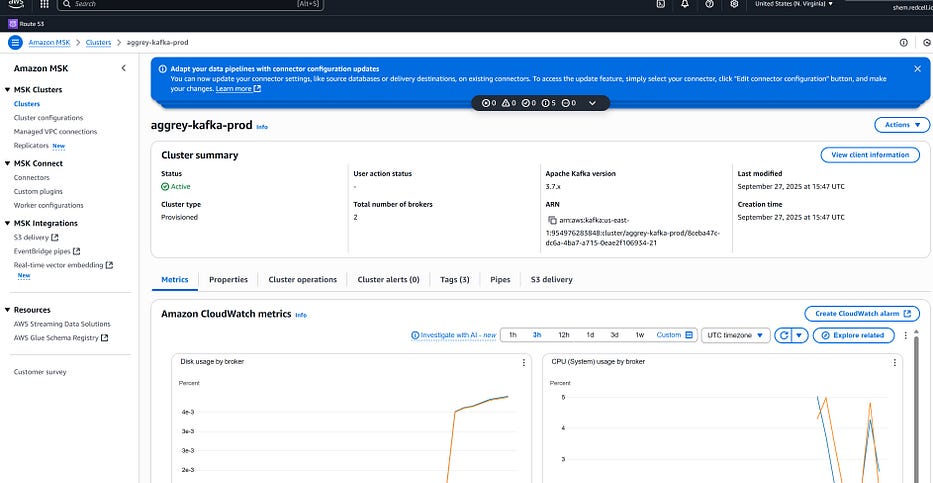
AWS Infrastructure
The production deployment leverages a robust AWS architecture:
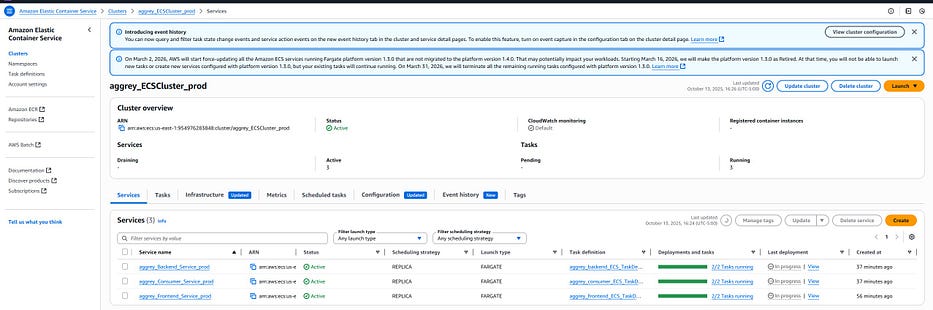
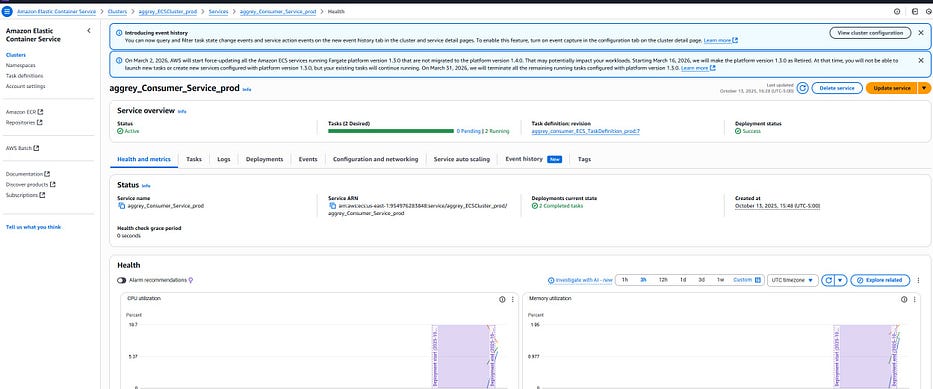
- ECS Fargate for containerized microservices
- Application Load Balancer with SSL/TLS termination
- AWS MSK (Managed Streaming for Kafka) for event streaming
- CloudFront CDN for global content delivery
- ECR for container image registry
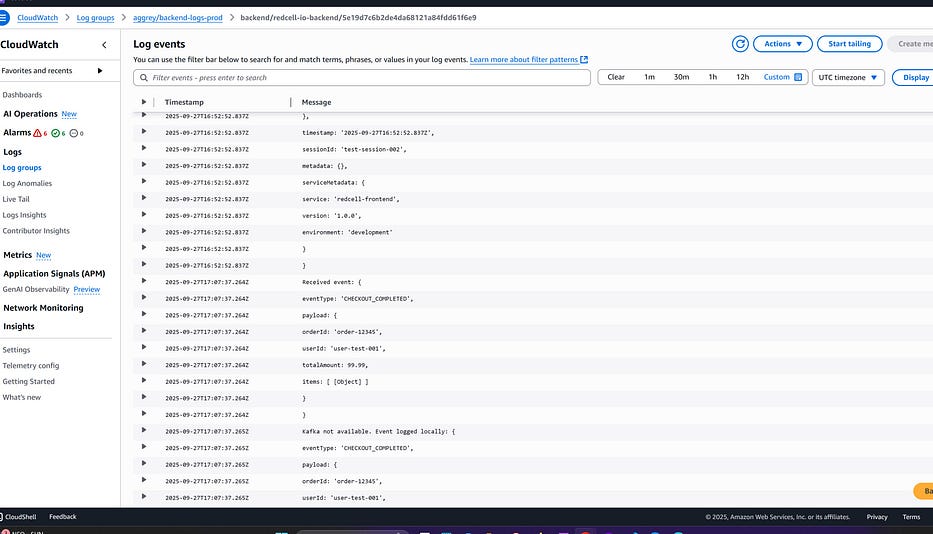
- CloudWatch for logging and monitoring
- Route53 for DNS management
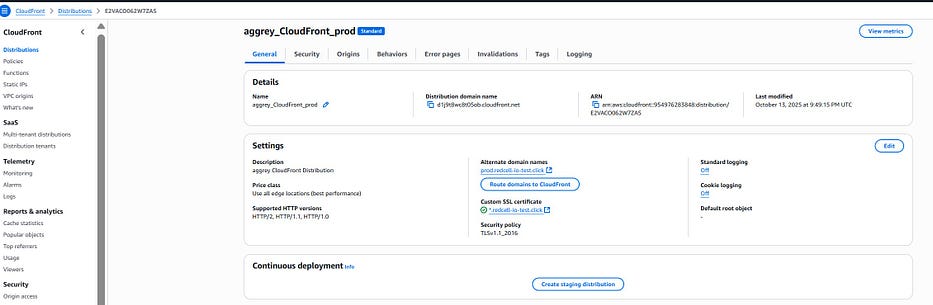
Claude Code: A Game-Changing Development Experience
The Original Challenge
Initially, I had built this application using traditional prompt engineering with Claude, deploying it on ECS with EC2 launch type. While functional, I wanted to modernize the infrastructure to use Fargate for better cost optimization and reduced operational overhead.
This is where Claude Code proved transformative.
What Makes Claude Code Different
Claude Code isn’t just another AI assistant — it’s a comprehensive development environment that can:
1. Read and understand entire codebases contextually
2. Execute commands and tools directly in your environment
3. Make systematic changes across multiple files
4. Validate deployments and troubleshoot issues in real-time
5. Learn from your project structure and maintain consistency
The Refactoring Journey: EC2 to Fargate in Minutes
Understanding the Existing Codebase
The first remarkable aspect was Claude Code’s ability to analyze my entire project structure. It read through:
- 15+ Terraform configuration files
- Frontend React components and services
- Backend Express.js applications
- Docker configurations
- Infrastructure scripts
Within seconds, it had a comprehensive understanding of the application architecture, dependencies, and deployment pipeline.
Systematic Infrastructure Transformation
The refactoring process was methodical and impressive:
1. Infrastructure Analysis
Claude Code identified every component that needed modification for the Fargate transition:
- ECS task definitions
- Security group configurations
- Network settings
– Resource allocation adjustments
2. Code Modernization
It updated multiple files simultaneously:
- Modified Terraform configurations for Fargate compatibility
- Updated Docker files for optimal container sizing
- Adjusted environment variable configurations
- Enhanced monitoring and logging setups
3. Dependency Management
The tool automatically handled complex relationships between:
- VPC networking configurations
- Security group dependencies
- Load balancer target group settings
- Auto-scaling policies
Real-Time Problem Solving
During deployment, we encountered several challenges that showcased Claude Code’s problem-solving capabilities:
Challenge 1: Kafka Consumer Production Bug
The consumer service was failing because it tried to run npm run consumer (a development command) in production. Claude Code:
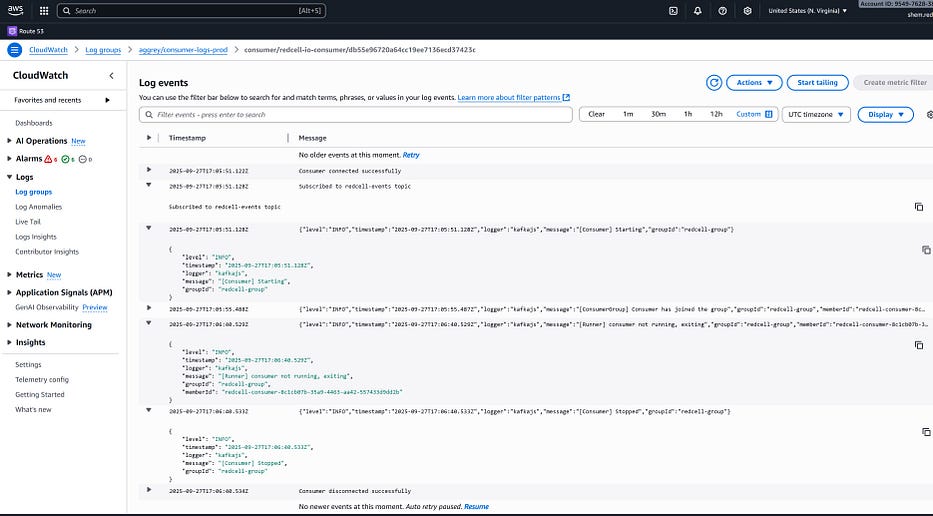
• Analyzed the error logs from CloudWatch
• Identified the root cause in the ECS task definition
• Fixed the command to use the compiled JavaScript: node dist/consumer.js
• Updated and redeployed the infrastructure
Challenge 2: Kafka Broker Configuration
The backend couldn’t connect to the MSK cluster due to improper broker URL parsing. Claude Code:
• Detected the issue in application logs
• Identified that comma-separated broker URLs weren’t being parsed correctly
• Fixed the parsing logic in both backend and consumer services
• Rebuilt and pushed updated Docker images
Testing and Validation: A Comprehensive Approach
Systematic Testing Strategy
Claude Code helped implement a comprehensive testing approach:
1. Local Development Testing
- Docker Compose setup with local Kafka
- End-to-end event flow validation
- Browser interaction testing
2. AWS Production Testing
- Health endpoint validation
- Event streaming pipeline testing
- CloudWatch log monitoring
3. Real-Time Debugging
When I performed browser interactions (adding items to cart, checkout), Claude Code:
- Monitored CloudWatch logs in real-time
- Identified successful event capture
- Diagnosed the Kafka connectivity issue
- Provided detailed troubleshooting steps
Event Streaming Validation
The testing revealed fascinating insights about the application’s event flow:
{
"eventType": "CHECKOUT_COMPLETED",
"payload": {
"orderId": "order-12345",
"userId": "user-test-001",
"totalAmount": 99.99,
"items": […]
},
"timestamp": "2025–09–27T17:07:37.264Z",
"sessionId": "anonymous"
}
The frontend-to-backend communication worked flawlessly, but the Kafka connectivity issue provided a valuable learning experience about AWS networking and security groups.
Advantages of Using Claude Code
1. Contextual Understanding
Unlike traditional AI assistants, Claude Code maintains context across the entire session. It remembered infrastructure decisions made hours earlier and applied them consistently across all modifications.
2. Multi-File Coordination
The tool’s ability to modify multiple related files simultaneously was remarkable. When updating the ECS task definition, it also updated corresponding security groups, environment variables, and monitoring configurations.
3. Real-Time Validation
Claude Code could execute AWS CLI commands, analyze CloudWatch logs, and validate deployments in real-time, providing immediate feedback on changes.
4. Documentation and Learning
Throughout the process, it generated comprehensive documentation, including architecture diagrams and testing procedures, making the project maintainable for the future.
5. Error Recovery
When deployments failed or configurations were incorrect, Claude Code could quickly identify root causes and implement fixes without starting from scratch.
Challenges and Limitations
Learning Curve
Initially, understanding how to effectively communicate with Claude Code required adjustment. Learning to provide clear, specific instructions improved collaboration significantly.
Complex Debugging
While excellent at systematic problems, some nuanced AWS networking issues required domain expertise and careful investigation.
Tool Limitations
Certain AWS-specific operations required manual intervention, particularly around security configurations and advanced networking setups.
Key Takeaways and Recommendations
For Developers
1. Start with clear project structure — Claude Code works best with well-organized codebases
2. Provide comprehensive context — The more information you share, the better the assistance
3. Use iterative development — Break complex tasks into smaller, manageable pieces
4. Validate frequently — Test each change before proceeding to the next
For Infrastructure Teams
1. Infrastructure as Code is essential — Terraform configurations made refactoring possible
2. Monitoring is crucial — CloudWatch logs were instrumental in debugging
3. Security requires attention — Network configurations need careful consideration
4. Documentation pays dividends — Well-documented code accelerates AI assistance
The Future of AI-Assisted Development
This experience demonstrated that AI-powered development tools like Claude Code aren’t just productivity enhancers — they’re paradigm shifters. The ability to:
- Understand complex, multi-service architectures
- Make coordinated changes across dozens of files
- Debug production issues in real-time
- Generate comprehensive documentation
…represents a fundamental evolution in how we approach software development.
Conclusion
Building and deploying a full-stack, event-driven application on AWS Fargate with Claude Code was both challenging and rewarding. While we encountered technical hurdles — particularly around Kafka connectivity — the overall experience showcased the immense potential of AI-assisted development.
The transformation from ECS EC2 to Fargate, which traditionally would have taken days of careful planning and implementation, was completed in hours with Claude Code’s assistance. More importantly, the tool didn’t just execute changes — it helped me understand the implications, document the decisions, and build a more maintainable system.
For developers working with cloud infrastructure and complex architectures, Claude Code represents a significant leap forward in development capability. It’s not about replacing human expertise but amplifying it, enabling us to focus on solving business problems rather than wrestling with configuration details.
The future of development is collaborative — human creativity and strategic thinking combined with AI’s systematic execution and vast knowledge. This project was just the continuation of that journey.